
You have a diagnosis, and on top of the illness comes the fear. Especially when the illness is serious, chronic, or even life-threatening. In my practice in Duesseldorf and online, I support people in leaving illness-related anxiety behind, drawing on over 25 years of experience.
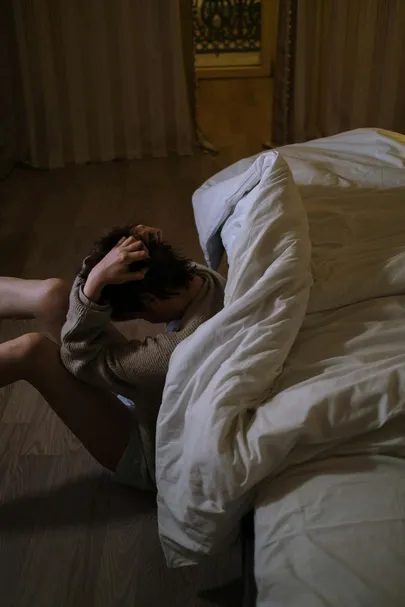
What happens when the thoughts won't stop spinning?
Many people suffer not only from the illness itself but also from the fears it brings along. The thoughts keep circling around the future. How will everything develop? Will I get better? Will the illness get worse? Will I be able to continue living my life as before?
Sometimes the fears only emerge with the diagnosis, sometimes you have carried them for many years because you had distressing experiences with illness, hospital stays, or medical treatments earlier in life.
Some people have intense fear of operations, examinations, or medications. Others fear complications, relapses, or a severe course of the disease. Still others are afraid of being permanently limited or becoming dependent on others.
Why does the fear extend beyond health alone?
Often the fear goes beyond health and reaches into many other areas of life. How will the illness affect the relationship? Friendships? The family? Work? Travel, hobbies, or your own attractiveness? Many people experience deep uncertainty and feel they are losing control over their lives.
What are the signs of anxiety with illness?
- Constant monitoring of the body: Every pain, every change is noticed and evaluated
- Compulsive checking of blood pressure, pulse, or specific body areas
- Harmless bodily sensations are immediately interpreted as warning signs
- Persistent rumination about possible catastrophes that may never happen
- Avoidance of movement, exercise, or certain activities out of caution
- Permanent self-restriction even though the body could handle more
- Withdrawal from social life and a gradual loss of quality of life
- Sleep problems, exhaustion, inner restlessness, or additional physical symptoms caused by the tension
How does the cycle of illness, fear, and self-monitoring develop?
Sometimes you see ghosts everywhere. A harmless twinge is immediately interpreted as a warning sign. A normal bodily sensation triggers strong worry. The thoughts keep returning to possible catastrophes, even though they may never come to pass.
Behaviour often changes too. Many people become more cautious. They avoid certain movements, give up exercise, or trust their body less and less. Some restrict themselves permanently even though their body could handle more. Others withdraw and gradually lose quality of life because fear is making more and more of their decisions.
The constant tension drains energy. It can lead to sleep problems, rumination, exhaustion, inner restlessness, or even additional physical complaints. This is how a distressing cycle of illness, fear, and constant self-monitoring develops.
Why do loved ones suffer from the fear too?
It is not only the patients themselves who suffer from the anxiety. Partners, parents, children, and close friends often experience similar fears – the fear of losing a loved one, the helplessness of not being able to do anything, the constant worry in the background. Many loved ones function outwardly while carrying enormous pressure on the inside.
Those accompanying a person through illness often put their own needs aside. Their own fear is played down because the other person is "worse off." Yet this fear also deserves attention and support. In coaching, there is space for both sides – for patients and for the people who stand beside them.
How do we work on illness-related anxiety in coaching?
In coaching, we look at these fears and at the fears behind these fears. We work on building more security, trust, and quality of life again, so that the illness no longer dominates all your thinking and acting.
My approach: The SAF Method™
The SAF Method™ stands for the three steps we work through in coaching:
- S – Soothe the Symptoms: Racing heart before the doctor's appointment, sleeplessness after a new result, the constant tension in your body. In the first step, you learn to calm these reactions down.
- A – Address the Activators: The moment of diagnosis, a distressing hospital stay, the doctor's face during the discussion of results, the feeling of being at someone else's mercy. We defuse what switched parts of you into a permanent mode of fear.
- F – Free the Fueling Thoughts: "My body has let me down", "I am at its mercy", "Things will never be the same again". These deep beliefs keep the fear alive. In the third step, we release these "fueling thoughts" so that the illness no longer dominates all your thinking.
In over 10,000 coaching hours, I have learned that it is never the illness alone that creates the fear. It is the thoughts about it that make the fear grow. And thoughts can be worked on, even if the illness remains.
Which method addresses what?
| Method | What it does for illness-related anxiety |
|---|---|
| WingWave | Releases the emotional charge of the experiences that shaped the fear: the moment of diagnosis, a distressing hospital stay, the feeling of being at someone else's mercy |
| Hypnosis | Builds an inner sense of safety so that your body no longer goes into alarm mode with every doctor's appointment, every examination, or every new symptom |
| NLP | Interrupts the catastrophic thoughts that drive the rumination: "It is bound to get worse", "I cannot handle this", "The treatment will not work" |
| The Work | Examines the beliefs behind the fear: "My body has let me down", "I am at its mercy", "Things will never be the same again" |
| IFS | Gets to know the inner parts that have been on high alert since the diagnosis and try to protect through constant vigilance and control |
| TRT | Reaches deep biographical layers when the fear is rooted in earlier experiences: illness and loss in childhood, distressing hospital experiences, family patterns |
Which topics are related to anxiety with illness?
- Fear of Illness – When health worry dominates everyday life, even without a diagnosis
- Fear of Death – When the fear of dying dominates your life
- Complex Anxiety Cycle – How worry, body signals, and avoidance reinforce each other
- Fear of Fainting – The fear of losing control over your own body
- Existential Anxiety – When worry about the future overshadows everything
- Generalized Anxiety Disorder – When fears spread
Frequently Asked Questions about Anxiety with Illness
What is anxiety with illness?
Anxiety with illness describes fears that arise in connection with an existing medical condition. Unlike hypochondria, an actual diagnosis is present – the fear develops as a companion to the illness itself.
What fears commonly occur with illness?
Common fears include fear of operations, examinations, or medications, fear of complications and relapses, fear of permanent limitation or dependence, and worries about relationships, family, and work.
How does anxiety with illness differ from hypochondria?
With hypochondria, the fear revolves around illnesses that have not been diagnosed. With anxiety accompanying illness, a real condition is present and the fear relates to its course, consequences, and impact on life as a whole.
Why does illness-related anxiety often intensify on its own?
It intensifies when a cycle develops: The illness creates fear, the fear leads to constant body monitoring and tension, the tension produces additional physical complaints, and these in turn fuel the fear.
What helps in the acute moment?
Conscious slow exhalation, grounding through your senses, and returning to the here and now can help in an acute situation – especially before doctor's appointments, examinations, or when the thoughts start spiralling. But the fear behind it needs a different approach. In coaching we work on what made your nervous system so sensitive — and on the "fueling thoughts": the beliefs that keep triggering the fear anew.
Can you overcome anxiety with illness?
Yes. When the fear is linked to a specific experience – a distressing diagnosis, a difficult hospital stay, a treatment that has lodged itself in the body – the emotional charge of that experience can be targeted directly. When deeper beliefs are behind it, such as "My body has let me down" or "I am at its mercy", we can examine and change them. The goal is that the illness no longer dominates all your thinking and acting, and that you develop trust in yourself and your body again.
My concern may not be serious enough.
Perhaps your condition is medically well treatable and you wonder why you still have so much fear. Perhaps you sleep badly before every doctor's appointment even though your last results were fine. Perhaps you restrict yourself more than necessary because you no longer trust your body. Perhaps you play down your own fear because others are supposedly worse off. All of this is reason enough to take a closer look – because these restrictions tend to grow over time rather than shrink.
I have already tried many things.
Many people with illness-related anxiety have already tried pulling themselves together, thinking positively, distracting themselves, or getting reassurance from doctors – and still the fear returns immediately before the next appointment, the next result, the next symptom. This is rarely about a lack of willpower. It is because previous attempts did not reach the place where the fear actually sits: the experience that triggered it, the inner part that has not been able to rest since the diagnosis, or the belief in the background that your own body could become a threat at any moment. In coaching, we work precisely there. It is rarely about willpower – what has been missing is the right approach.
Ready for the next step?
Get in touch if you would like initial guidance and a clear way forward.